The team redefining how skills are measured.
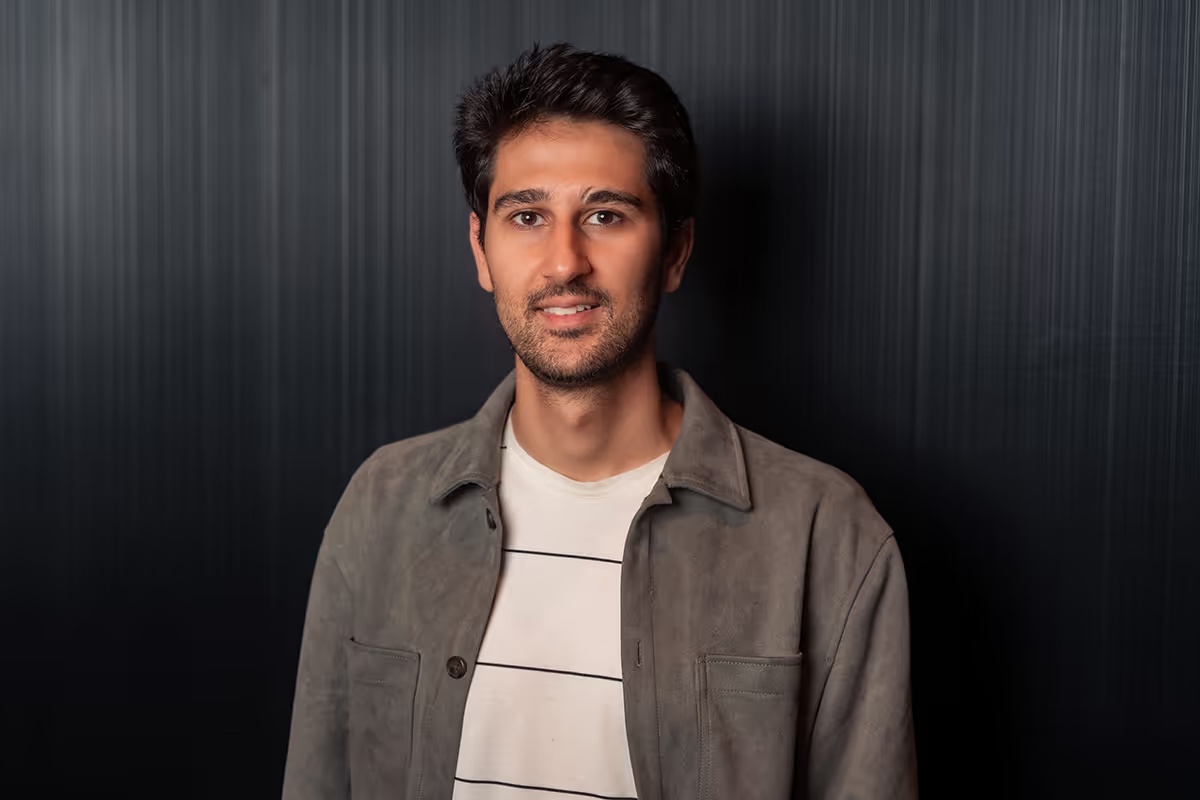
Kian Katanforoosh
Founder & CEO
Kian leads Workera’s scientific vision, shaping how advances in AI can deepen our understanding of human capability at scale. His focus is pushing the frontier—then translating those advances into systems that are interpretable, accountable, and fit for consequential decisions.
As founder and CEO, he bridges frontier AI research with the realities of building products that must earn trust in the real world—ensuring innovation is paired with clarity, responsibility, and measurable impact.
AI leadership at global scale
Co-creator of Deep Learning Specialization with Andrew Ng
Adjunct professor at Stanford University
Recognized for translating AI research into real-world systems
World Economic Forum Technology Pioneer (2025)
Walter J. Gores Award for Excellence in Teaching (Stanford)
Forbes 30 Under 30 (Education)

Dr. Taylor Sullivan
VP of Product and Assessment Science
Taylor leads the end-to-end design of Workera’s assessment system, translating modern assessment science into scalable, AI-native products. She ensures skills are defined, measured, and interpreted in ways enterprises can trust across high-stakes talent decisions.
15+ years designing high-stakes assessment systems
Former product and assessment leader at Codility and HumRRO
Expert in evidence-centered design and AI-enabled measurement

Dr. Marian Pitel-Wali
Manager, AI Assessment Science
Marian leads the scientific rigor behind Workera’s AI-driven assessments, ensuring innovation scales without sacrificing validity, fairness, or transparency. She governs how assessments are built, scored, monitored, and reviewed as AI plays a larger role in skill evaluation.
10+ years across assessment science, software, and AI
Expert in human-in-the-loop measurement and review systems
Co-founder of an assessment technology company deployed at scale
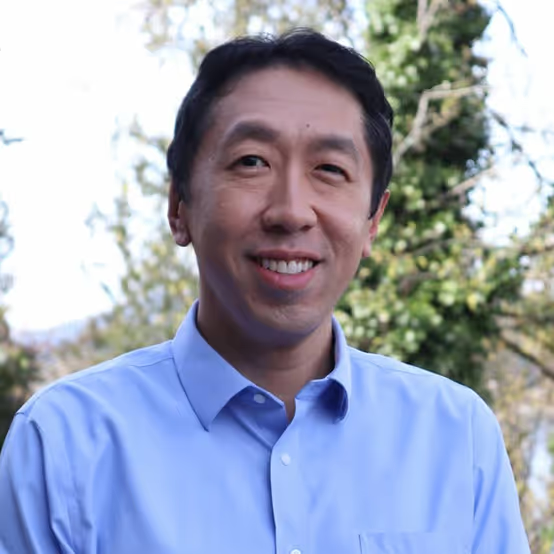
Andrew Ng
Chairman of the Board
Andrew provides strategic guidance to Workera on the responsible use of AI in education and workforce development. A globally recognized AI leader, he brings deep technical expertise translating research into real-world systems at scale.
Founder of DeepLearning.AI and co-founder of Coursera
Former Chief Scientist at Baidu and founding lead of Google Brain
Author of 200+ research papers; named to the TIME100 AI list
AI should strengthen measurement, not shortcut it.
Better evidence
AI unlocks a richer, more direct read on skills through realistic scenarios, interactive tasks, and multiple response formats that reflect how work is actually done, not how knowledge is guessed or recalled.
Rigor at scale
Assessment science is built into the system itself, so the standard holds as you expand across roles and use cases. Clear constructs, evidence-centered design, and calibrated scoring keep results consistent and comparable.
AI at the pace of work
Because skills and roles evolve quickly, measurement must evolve with them. Continuous monitoring and scientist-led iteration keep signals accurate and defensible as work changes.
Evidence at every step.
Workera’s skill verification system follows an end-to-end lifecycle designed for accuracy, consistency, and durability at enterprise scale.
Define skill frameworks
Clear constructs and proficiency levels, grounded in expert input and real-world relevance, so the right skills get measured, not convenient proxies.
Design real-world tasks
Scenario-based work elicits observable evidence of applied skill, so people demonstrate what they can actually do in context.
Generate & validate
Tasks are refined using Evidence-Centered Design, accessibility review, and bias evaluation, so assessments are defensible before they ever ship. Every variant is checked against the original on difficulty, coverage, and length, so a later measurement still compares to the first.
Expert-grounded scoring
Each response gets the method it warrants: deterministic where answers are fixed, expert-aligned where judgment is required, so results stay consistent, explainable, and auditable.
Monitor & evolve
Continuous reviews track reliability, performance, and construct stability as you grow, so accuracy holds as roles, data, and work change.
Experience design is a measurement decision.
Clear language and guided reasoning help people show what they know without guesswork.
Multiple response options and accessibility support make assessments usable across different abilities and contexts.
Immersive assessments
Built-in consistency checks keep scoring stable and equitable over time.
AI handles the first pass at scale, and human reviewers stay in the loop, with an appeal path whenever judgment is needed.
Book Demo
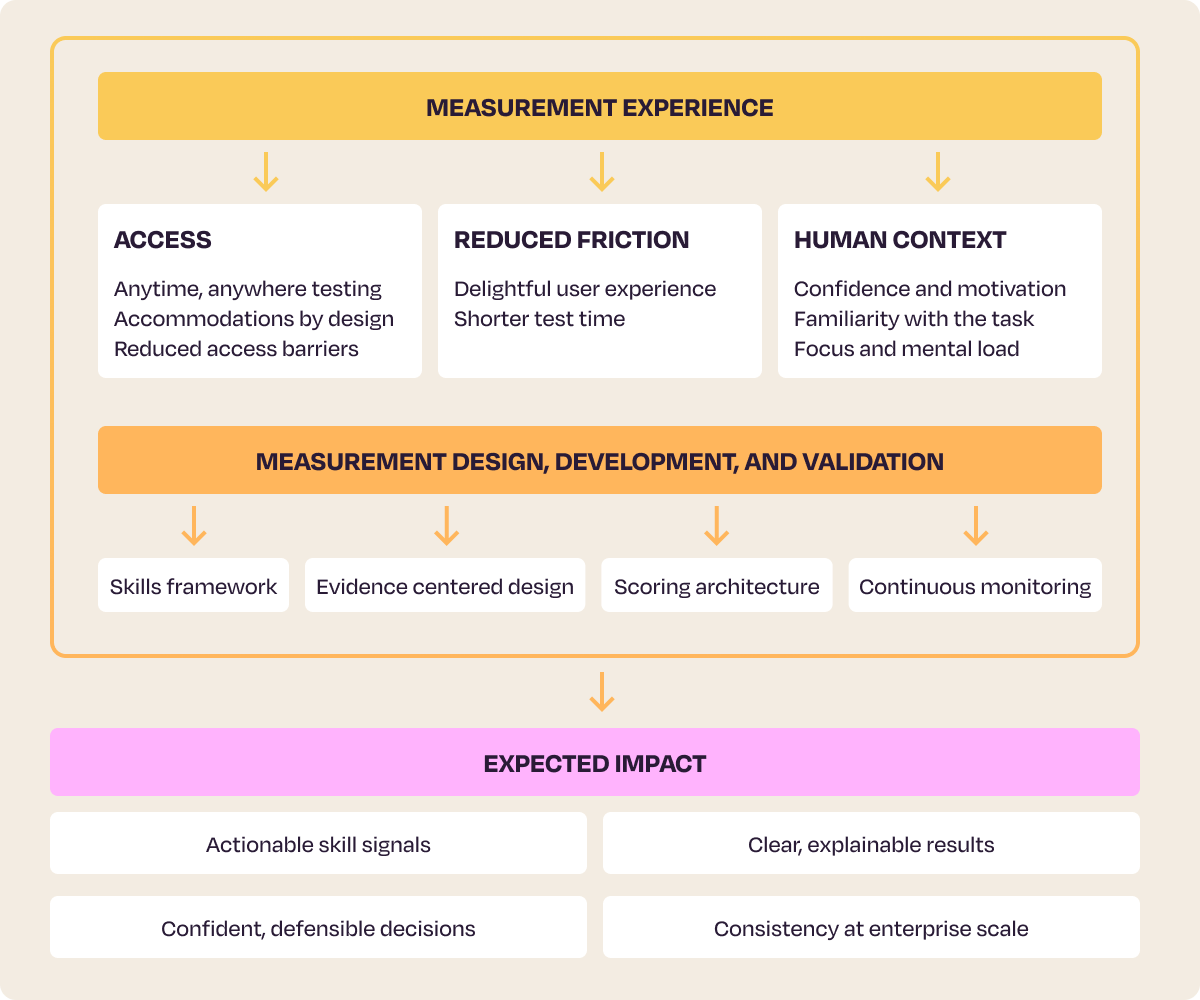
Responsible AI built to inform high-stakes decisions.
Transparent scoring
Deterministic prompts keep reasoning traceable and suppress unsupported model output.
Human oversight
Review pathways and contestability ensure humans remain involved in consequential decisions.
Continuous monitoring
Drift checks, stability reviews, and scoring audits detect changes before they impact results.
Strong governance
Model and prompt versioning, traceability logs, and strict access controls.
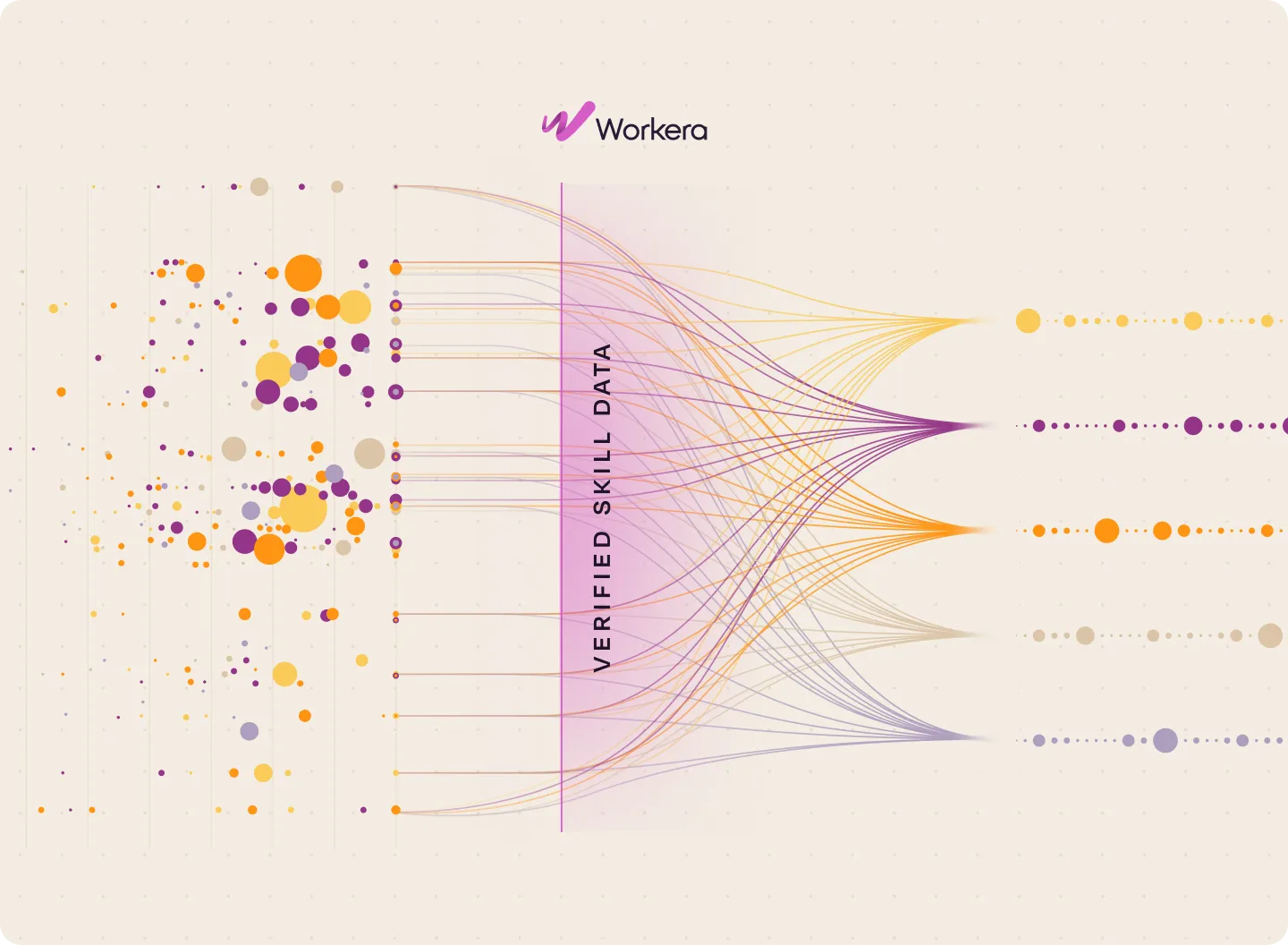
Verified skills that drive real decisions.
Clear, interpretable insights
Every result comes with the evidence behind it. What was measured, how it was scored, and what it means for readiness.
Targeted development
People receive personalized recommendations, grounded in their verified gaps and strengths.
Mobility and career pathways
Skill signals reveal who's ready for new roles, where to reskill, and how to grow from within.
Team and capability intelligence
Leaders see consistent, comparable data across roles and functions, for talent planning and project staffing.
Organizational visibility
An aggregated view surfaces the state of the workforce and where to invest in learning and transformation.
Progress you can measure
Longitudinal skill signals show growth over time—revealing improvement, proficiency gains, and where support is still needed.
FAQ
Workera defines skill measurement as the process of capturing demonstrated capability through observable behavior, not through proxies such as self-report, job titles, or learning activity.
Measurement focuses on how individuals reason, decide, and act in realistic, job-relevant scenarios. Each interaction produces evidence that contributes to a clearer, more interpretable view of skill proficiency and confidence. This evidence-based approach allows skills to be measured in a way that supports meaningful interpretation and real-world decision-making.
In Workera’s measurement system, validity refers to whether skill signals support the decisions they are used to make.
Validity is not a property of a test in isolation. It is evaluated by examining how individuals respond to tasks, how signals behave over time, how closely measurement aligns to real work, and the consequences of using those signals in practice. Workera follows a modern, unitary view of validity, integrating multiple sources of evidence to ensure skill interpretations are appropriate, trustworthy, and defensible for their intended use.
Proxies such as course completion, job history, or self-assessment provide indirect signals about skill exposure, not proof of capability.
Workera focuses on evidence because enterprise decisions require confidence that skills are actually present and applicable. Direct evidence reduces noise, improves interpretability, and enables consistent comparison across people, roles, and time. This is especially important as the stakes of workforce decisions increase.
At Workera, AI is used to strengthen measurement, not to shortcut it.
AI supports the generation of job-relevant scenarios, the orchestration of conversational measurement moments, and the consistent evaluation of skill signals at scale. Crucially, AI operates within measurement-science guardrails: signals remain interpretable, reviewable, and grounded in evidence. This allows Workera to scale skill verification while maintaining trust and defensibility.
Skills data increasingly informs decisions about readiness, investment, and execution. When measurement lacks rigor, those decisions become risky.
Rigorous, evidence-based measurement ensures that skill signals remain meaningful as roles evolve, organizations scale, and expectations change. This is what allows skills data to function as a reliable system of record, supporting decisions that must be explained, audited, and defended over time.
Because the second attempt is not the same assessment, and it is not a random substitute either. It is a variant built from the same blueprint and checked before anyone sees it: just as hard, same skills, same question types, close to the same length.
We judge that across the whole assessment rather than question by question, since small differences even out over a full form.
After launch we watch how people actually score on each variant, and flag any that drifts.
Skip that step and a second score is an unknown mix of learning, memory, and luck of the draw.