How AI Is Changing Workplace Learning and Skill Development
About This Conversation
Episode one of the Skills Forecast series opens with a fireside conversation between Taylor Sullivan and Laurie Niles Hoffman on what L&D leaders must do differently in 2026. The conversation covers the rising pressure on learning functions to prove business impact, why most EdTech implementations fail, the question every L&D leader should now ask before building any training ("will this be automated?"), and how AI is fundamentally reshaping where and how learning actually happens inside organizations.
Speakers
Taylor Sullivan is VP of Product and Assessment at Workera, where she leads the development of AI-native skill assessments grounded in psychometrics and learning science. She has spent over fifteen years as an industrial-organizational psychologist, focused on building ethical, scalable, and adaptive approaches to measurement.
Laurie Niles Hoffman is the author of The Eight Levers and founder of Eight Levers, a consultancy that helps learning and talent functions inside enterprises build more effective, strategically aligned L&D ecosystems. She brings twenty-five-plus years of experience working with organizations through technology implementations and workforce transformations.
L&D Is No Longer a Support Function: It Is Core to Enterprise Success
L&D is no longer a support function — in many organizations, especially those entering their skills-based organization era, it is central and pivotal to enterprise success. CEOs are now asking harder, sharper, more critical questions of CLOs and other L&D leaders than they were even a few years ago: Do we have the skills to execute our strategy? Where are we exposed? Where do we have gaps? How do we know our efforts are working? The velocity at which businesses are changing because of AI has raised the bar on speed, personalization, and proof of impact. Data is more available than ever, making the learning function more visible and more accountable.
The Saxophone Analogy: Why L&D Leaders Are Under Unprecedented Pressure
Imagine you are a teacher who has to learn the saxophone, teach your students to play it at the same time, and perform at a CEO's jazz concert — all simultaneously. That's what L&D leaders are navigating right now. The technology has to be picked up as fast as possible, while staying focused on where the business is going, which has itself changed fundamentally. Leadership is looking at L&D with enormous expectations. If organizations don't get this right, the workforce won't be able to deliver against leadership's expectations and customers' needs.
Why Do Most EdTech Implementations Fail? (Spoiler: It's Not the Tech)
The biggest issue is that organizations tend to buy EdTech without a clear business case — they evaluate functionality rather than the problem they're trying to solve. Technology is just a vehicle. You have to know how to drive it, operate it, and think about how the organization will maneuver differently because of it. Without the people dimension — thinking through how the organization will operate differently — implementations stall. The humans still have to implement, drive, and find ways to deliver impact with the technology. That comes down to behavioral science: how people cope with change and how they learn new things.
Why Hasn't Skills Data Delivered on Its Promise for Many Organizations?
The core issue is that nobody has focused on the endpoint — what are we actually trying to do with skills? Organizations count skills, acknowledge gaps, and then the information stalls at the HR level without trickling down to L&D, which could fill those gaps. A common mistake is treating skills data as a checklist and trying to fill all gaps for everyone. Not everyone needs everything. The question of degree and contextualization matters enormously. Relying on generic frameworks like the World Economic Forum's top ten skills and issuing those pathways to everyone doesn't work — it's not how skill development actually happens in organizations.
How Is AI Changing Where and How Learning Happens Day to Day?
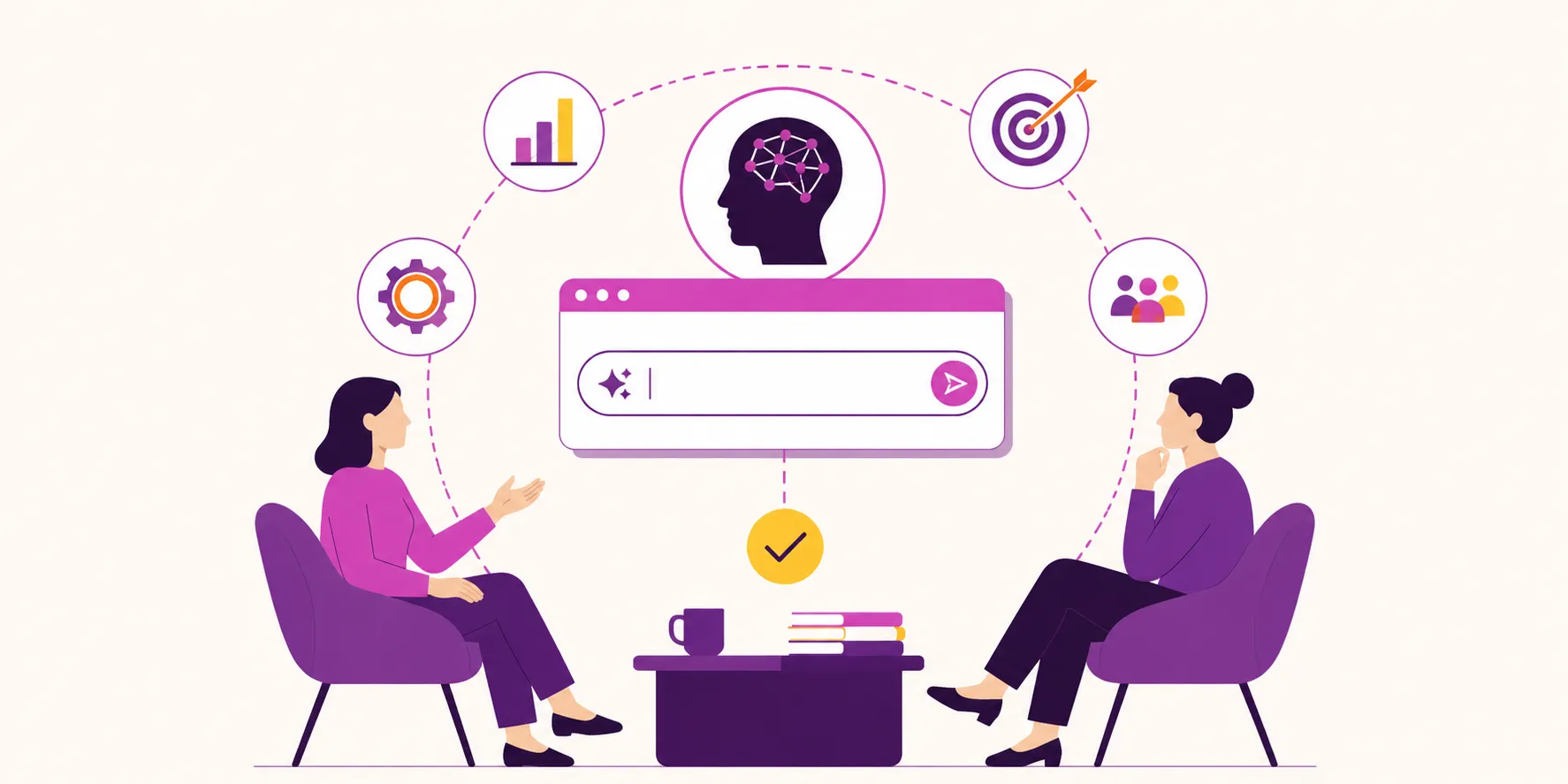
When you analyze the data on where learning is actually happening, it's not in the courses L&D builds. It's in the prompt bar — in Copilot, in Gemini. People are genuinely cultivating skills through extended, in-depth conversations with AI, not just quick-hit queries. AI coaches and AI tutors that are calibrated to actually teach — embedded in the prompt bar, knowing who you are, your business goals, the context of your role, and the skills gaps of the business — represent a significant shift. But the experience has to be bidirectional. It can't just be an empty tool that responds to whatever someone wants to learn. Organizations still need to guide people toward the skills that will help their careers and help the business.
Should L&D Even Teach This? The Automation Question Every Leader Must Ask
The first question every L&D leader should now ask before building any training is: is the performance outcome, task, or skill that the business partner is asking for likely to be automated? This single question repositions L&D into strategic conversations that matter. AI is automating many tactical, lower-level skills, making it harder to differentiate talent based on those competencies. The skill tree is moving upward — toward software architecture, systems thinking, and dependencies rather than code construction; toward judgment, reasoning, and problem-solving rather than knowledge recall.
Skills vs. Knowledge: Why the Distinction Changes How You Assess Talent
Knowledge is the facts, processes, and conditions learned through academic training. Skill is the application of that knowledge under nuance and in novel situations — how does this process break down? What are the alternatives? Who should be consulted? The execution and application of knowledge is where it gets difficult. As AI becomes an increasingly powerful font of knowledge and a tool for refreshing recall, what becomes more valuable is higher-order judgment, reasoning, and domain-specific critical thinking. Assessing those capabilities requires contextualized examples, not tests of scientific principles.
The Importance of Starting and Where to Begin
If you're a CLO figuring out where to start with skills, go to HR and ask: what roles are we struggling to fill internally? What skills are tied to those roles? What are we having trouble finding on the market? Then run small experiments — work with one or two skills for a targeted upskilling campaign, or calibrate an AI tutor for a specific division to move the needle on a specific in-demand skill. Understanding the use case, what decisions need to be made based on skills data, and ensuring the quality of that data aligns with the use case — that's the foundation. Start small, but start.

Trending Updates

Skills Intelligence: How to Measure AI Workforce Readiness