Skills Intelligence: How to Measure AI Workforce Readiness

Workera Team
About This Conversation
In this webinar, Jim Hemgen and Blaine Trainer explore why the metrics most learning leaders rely on — course completions, hours of learning, platform engagement — fail to answer the question executives are actually asking: is our workforce ready for AI? Drawing on Jim's experience as Chief Learning Officer at Booz Allen Hamilton, the conversation walks through what skills intelligence looks like in practice, from baselining a thousand engineers on GitHub Copilot to building talent scorecards that hold managers accountable for AI adoption.
Speakers
Jim Hemgen is VP of Partnerships at Workera, where he helps organizations build measurable AI workforce readiness programs. Before joining Workera, Jim spent twelve years at Booz Allen Hamilton, most recently as Chief Learning Officer, where he led the firm's AI readiness and skills intelligence initiatives across a workforce of tens of thousands supporting the federal government.
Blaine Trainer is VP of Product and Technology Partnerships at Udemy Business, where he works with partners like Workera to bring integrated skills and learning solutions to enterprise customers.
Why "Hours Spent Learning" Is the Wrong Metric for AI Readiness
When executives ask whether the workforce is ready for AI, learning leaders are often left responding with course completion data, enrollment counts, and hours logged. These metrics don't answer the question. What leadership actually wants to know is whether employees have the capability and capacity to apply AI today — and where the gaps are if they don't. Shifting to skills intelligence means having a real view into the workforce's skills profile, not just their learning activity.
Transforming Workforce Skills
Booz Allen was adopting a range of AI technologies and tools, and the role of the software engineer had evolved dramatically with the advent of AI. Engineers were now expected to leverage tools like GitHub Copilot, Windsurf, and Cline as part of their core tradecraft. The Chief Technology Officer needed to know that the software engineering population had fully adopted these capabilities at the speed required to remain competitive.
The solution was to identify the thousand engineers, baseline their proficiency against GitHub Copilot on a scale of one to five, and set a target of four. By week five, the cohort had hit the proficiency target. By week eight, the entire population was there. The view taken to the CTO wasn't about hours or enrollments — it was about whether the team hit the target by week five.
From Week 1 to Week 8: Tracking 1,000 Engineers' GitHub Copilot Proficiency in Real Time
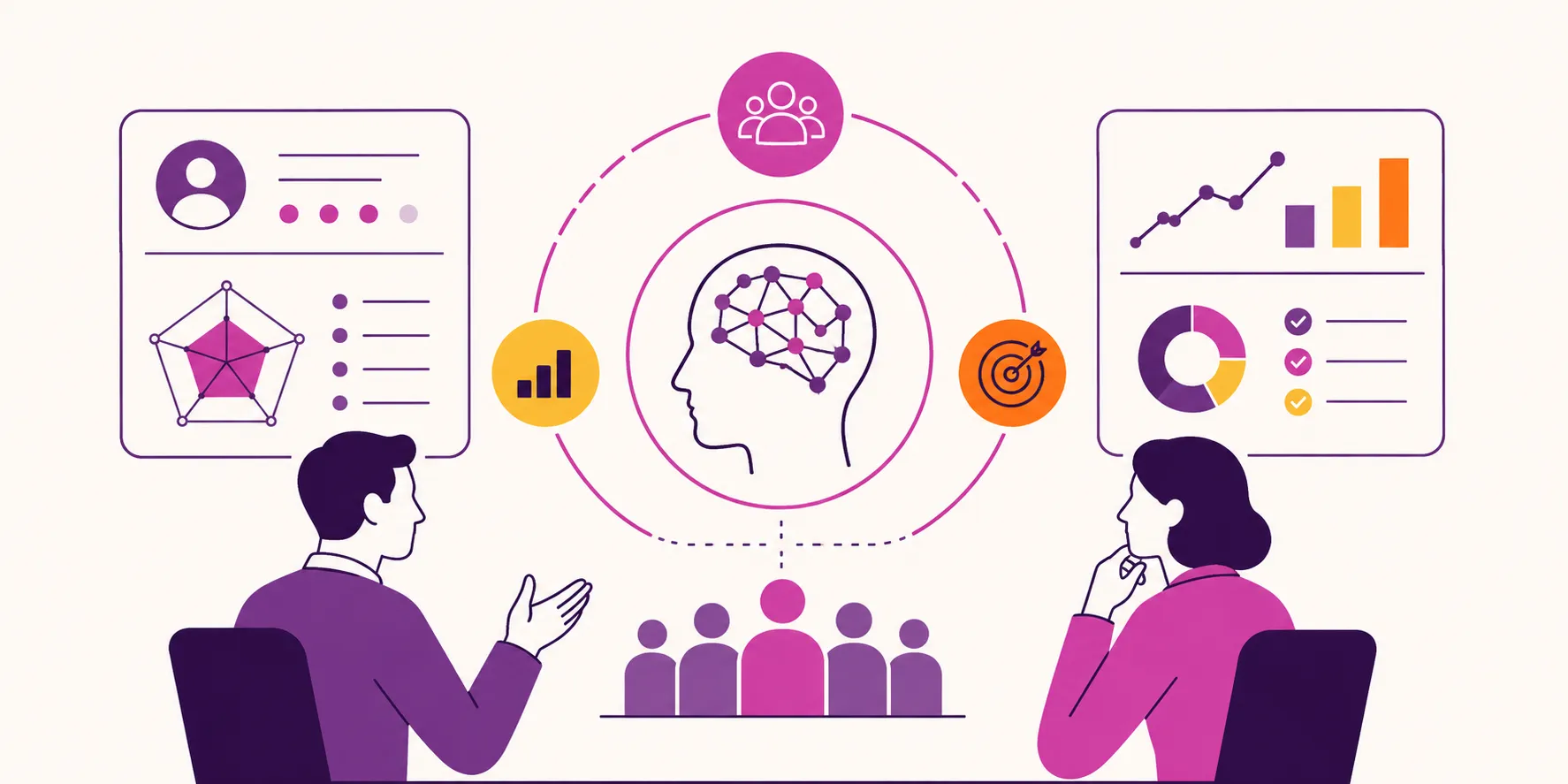
With skills intelligence in place, the conversation with leadership shifted. Baselining the entire population at a point in time, then exposing them to learning interventions, and marrying that data with HCM data created a talent scorecard sliced by team and manager. Leaders could see how their teams were performing on adoption and proficiency against each individual skill over time. For managers whose numbers were low, it became a coaching moment — and the internal competitiveness it created drove adoption in ways that course completions never could.
The Talent Scorecard That Made Managers Compete on AI Adoption
The talent scorecard changed the conversation with leaders. When proficiency data was visible by team, managers didn't want to be at the bottom of the list. That competitive dynamic drove adoption faster than any mandate. The CLO now had a tool to hold leaders accountable — not to how much learning was happening on their teams, but to whether their people were actually developing the skills the business needed.
Three Takeaways for Building AI Workforce Readiness Right Now
Have conversations with the business to understand what skills actually matter. Focus is key — there are hundreds of job families and thousands of skills, so zero in on the most critical ones for the job families that matter most right now, and the job families of tomorrow. Think carefully about how you'll capture the skills profile of your workforce today: self-reported skills, peer and manager ratings, and validated signals from tools like Udemy and Workera. Set targets, and put a stake in the ground. You can't understand the gap without having both sides of the equation.
Start with a controllable scope. The compelling moment comes when you show up to a leadership meeting with a view that moves the conversation from activity to capability. That's when everything else snowballs.
Trending Updates

How to Build an AI-Ready Workforce: Moving Beyond Activity Metrics